
Designing Standards-Aligned, Coherent, and Responsive Instruction
This artifact represents a full Algebra 1 lesson package designed to help students graph quadratic functions in factored form by connecting zeros, intercepts, axis of symmetry, and direction of opening. I selected this artifact because it reflects the planning decisions that happen before instruction begins, including standards alignment, learning goals, sequencing, differentiation, and assessment design. Rather than treating a lesson as a single activity, I approached planning as the design of a complete learning experience that would help students build understanding step by step.
Artifact: Graphing Quadratic Functions in Factored Form
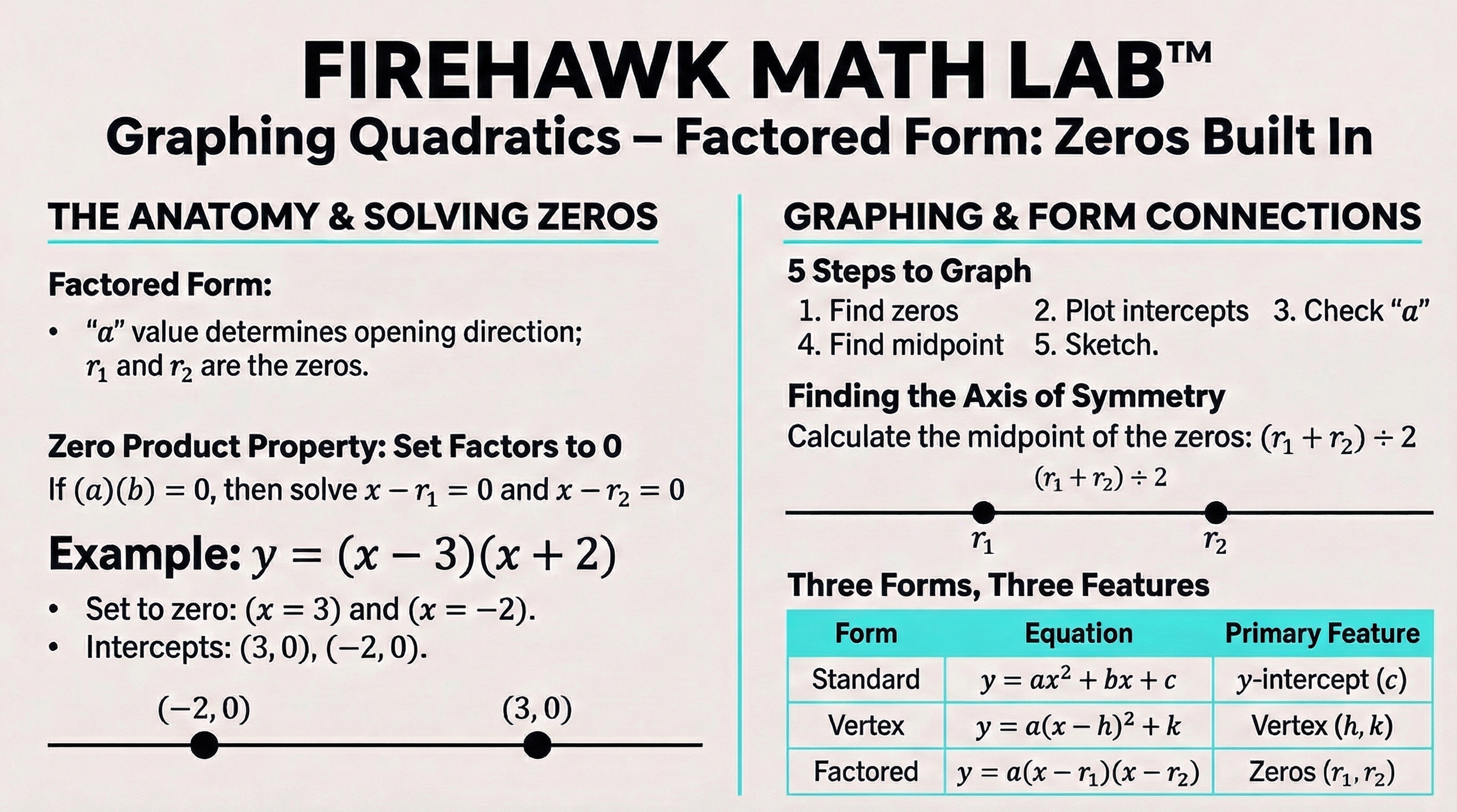
Algebra 1 lesson package including lesson plan, student worksheet, station activities, instructional slides, and exit ticket
Why This Artifact Fits Domain 1
This artifact is a strong representation of Domain 1 because it shows how instruction was prepared with clear purpose and structure before teaching began. The lesson identifies prerequisite knowledge, aligns to grade-level standards, establishes specific learning objectives, and includes both formative and summative assessment opportunities. It also reflects attention to student readiness and access by embedding visual supports, guided structures, and differentiated opportunities for diverse learners.
Planning for Coherent Instruction
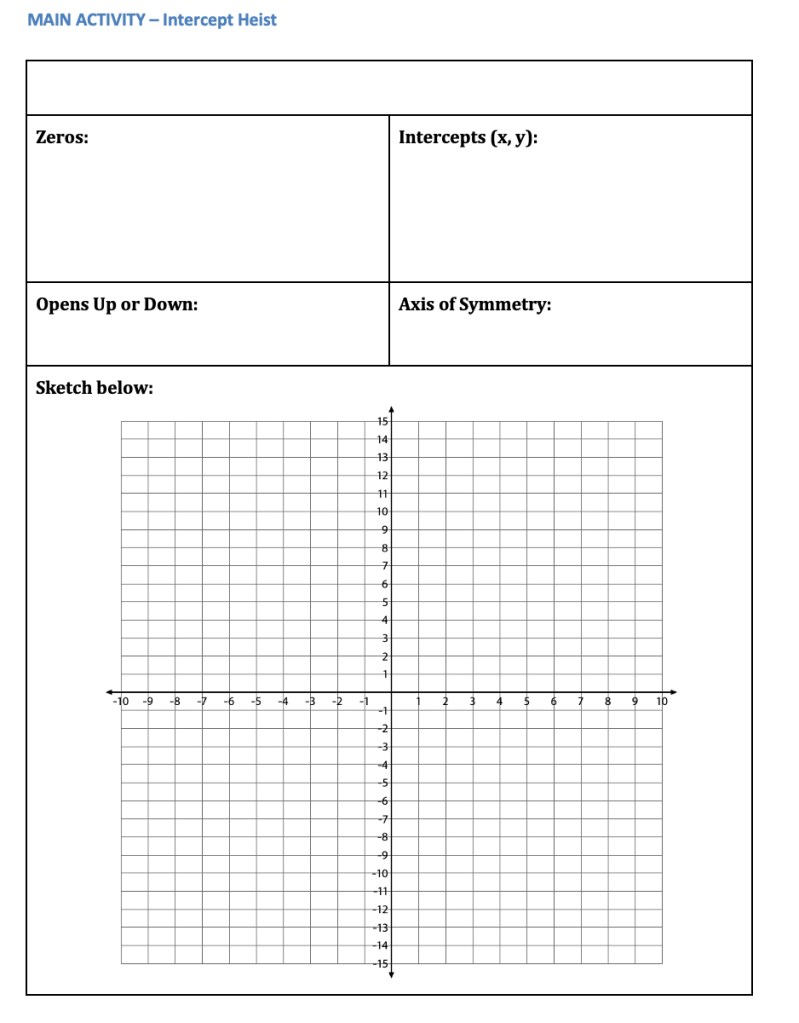
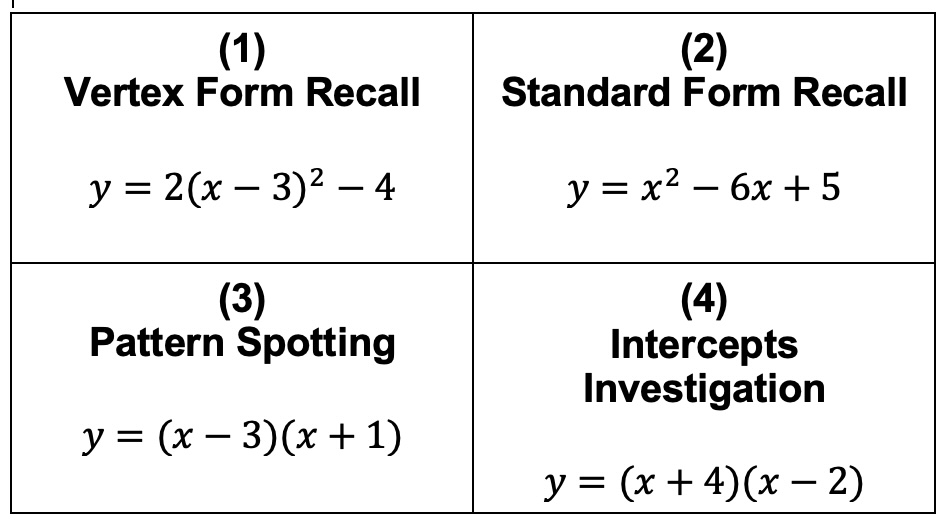
One of the most important planning choices in this lesson was the sequence of learning tasks. Students began with a station-based review of previously learned quadratic forms, moved into a mini lesson introducing factored form, practiced with teacher guidance, and then applied their understanding through a collaborative activity called “Intercept Heist.” The lesson ended with an exit ticket to check whether students could independently identify zeros, determine the axis of symmetry, and sketch a parabola from factored form. This sequence was intentionally designed to activate prior knowledge, build conceptual understanding, and gradually release responsibility to students. (Wiggins & McTighe, 2005)
Planning for Student Needs
This lesson also reflects my effort to plan with student differences in mind. For advanced learners, I included opportunities to move between factored form, vertex form, and standard form while analyzing how the value of a affects the graph. For English learners, I incorporated visual supports, explicit vocabulary, and reference materials to strengthen conceptual access. For students with exceptionalities, I planned scaffolds such as step-by-step graphing support, guided notes, and collaborative structures that reduced cognitive load while preserving access to grade-level content. These decisions were important because effective planning requires more than selecting content. It requires anticipating how different learners will experience that content.
Impact on My Growth as a Teacher
Creating this lesson package strengthened my understanding of planning as a process of alignment rather than simple preparation. It pushed me to think more carefully about how standards, objectives, instructional strategies, and assessments must work together coherently. It also helped me see that strong planning includes anticipating misconceptions, intentionally sequencing learning, and designing supports that make rigorous content more accessible without lowering expectations. As I continue to grow as an educator, this artifact represents an important shift in my practice toward more purposeful, student-centered instructional design.
Research and Best Practice Connection
This artifact reflects research-based best practices in lesson design, including clear learning goals, scaffolding, formative assessment, and gradual release of responsibility. Effective planning helps students build new understanding by connecting instruction to prior knowledge, intentionally sequencing tasks, and checking for understanding throughout the learning process. In mathematics instruction, visual representations, structured discourse, and opportunities for guided and independent practice are especially important for developing conceptual understanding and procedural fluency.
Reflection
This artifact represents the kind of planning I want to continue developing in my teaching: instruction that is standards-based, clearly sequenced, responsive to student needs, and grounded in meaningful assessment. It reminds me that strong teaching begins long before the lesson starts, in the intentional choices that shape how students will encounter, practice, and understand new learning.
 Rabih Borji