
Facilitating Student-Centered Learning Through Collaboration, Discussion, and Responsive Teaching
This artifact highlights how I facilitated instruction during an Algebra 1 lesson in which students worked collaboratively to graph quadratic functions in factored form. I selected this artifact for Domain 3 because it demonstrates how instruction moves beyond delivery and becomes an active process of questioning, observation, discussion, and adjustment. During this lesson, students worked together in a vertical learning environment to test ideas, explain their reasoning, and take increasing ownership of the mathematical thinking, while I circulated to monitor understanding, ask guiding questions, and bring the class back together to synthesize key findings.
Artifact: Instruction in Action During “Intercept Heist”
A collaborative Algebra 1 lesson showing student-led mathematical inquiry, teacher facilitation, and discussion-based learning during a lesson on graphing quadratic functions in factored form
This artifact is a strong representation of Domain 3 because it captures instruction as an interactive and responsive process. Students were not simply receiving information. They were working together to identify zeros, determine the axis of symmetry, decide whether the parabola opened up or down, and sketch graphs based on their findings. My role during the lesson was to structure the experience, support mathematical discourse, monitor understanding in real time, and use student thinking as a foundation for discussion and clarification. This reflects a view of instruction in which students are active participants in the learning process, and the teacher facilitates understanding through purposeful interaction.
Engaging Students in Learning
A central feature of this lesson was the use of collaborative and visible mathematical work to increase student engagement. Students worked in groups to analyze quadratic functions and make sense of how factored form reveals important graph features. The vertical learning environment encouraged students to stand, discuss, revise, and compare ideas in real time, making their reasoning public and interactive. This structure helped shift students from passive participation to active problem-solving, requiring them to test their thinking and contribute to a shared mathematical task. (Hattie, 2009)
Questioning, Discussion, and Teacher Facilitation
Throughout the lesson, I used circulation and questioning to support understanding without taking over students’ thinking. As groups worked, I listened to their reasoning, asked questions to clarify misconceptions, and guided students toward the key relationships between zeros, intercepts, symmetry, and graph shape. At the end of the activity, I brought students together to discuss their findings and connect individual group work to larger mathematical ideas. This whole-class synthesis helped students hear multiple approaches, compare reasoning, and strengthen their conceptual understanding through discussion.
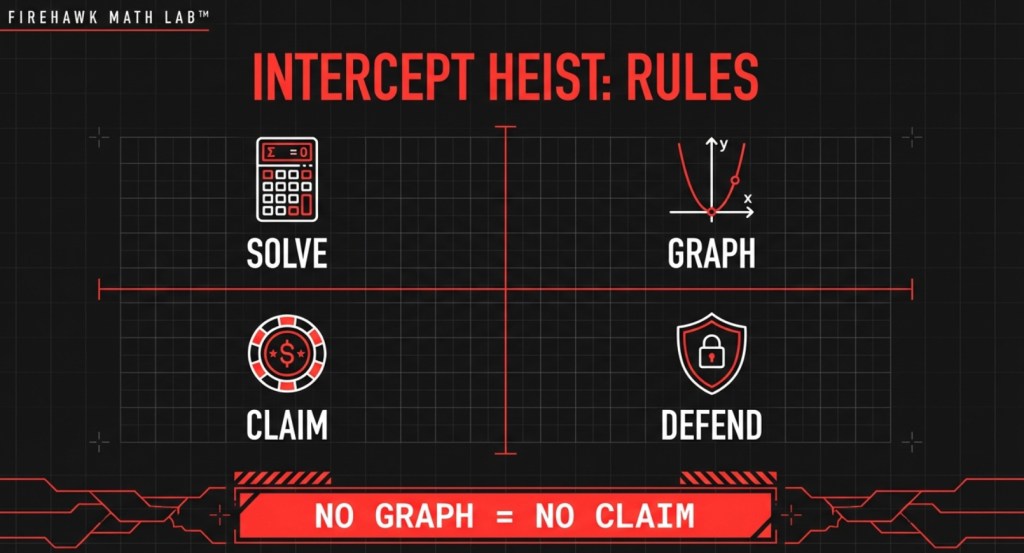
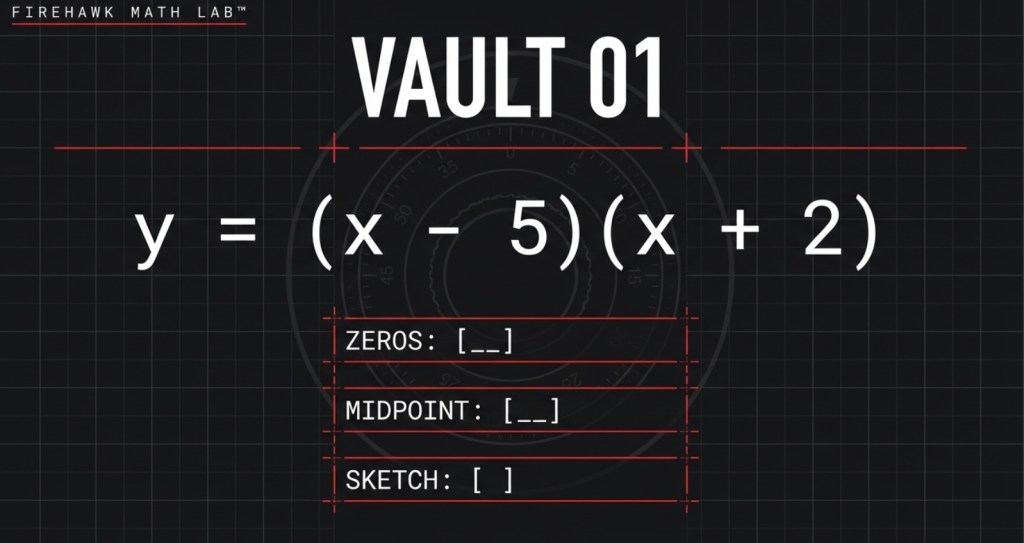
This student-facing task supported mathematical discussion by requiring students to analyze, justify, and graph quadratic functions rather than simply follow a memorized procedure.
Using Assessment in Instruction
This lesson also demonstrates how formative assessment can be embedded within instruction. As students worked in groups, I used their conversations, written work, and explanations as immediate evidence of understanding. This allowed me to identify where students were successfully applying the Zero Product Property and where they still needed support connecting zeros to x-intercepts or locating the axis of symmetry. The exit ticket at the end of the lesson provided an additional check on whether students could apply the process independently after the collaborative work and discussion.
Flexibility and Responsiveness During Teaching
One of the most important aspects of this lesson was the need to remain responsive while teaching. As students worked, I adjusted my support based on what I observed, sometimes pressing for clearer reasoning and other times stepping back to allow productive struggle. This flexibility was important because the lesson depended on students making sense of the mathematics rather than simply repeating a demonstrated method. By responding to student thinking in the moment, I was able to support deeper engagement while preserving student ownership of the learning process.
Impact on My Growth as a Teacher
This artifact reflects an important area of growth in my instructional practice: moving from teacher-led explanation toward more student-centered facilitation. It helped me see that strong instruction is not only about presenting content clearly, but also about creating the conditions for students to think, discuss, test ideas, and learn from one another. This lesson reinforced my belief that mathematical understanding grows when students are given opportunities to reason publicly, make mistakes, and revise their thinking with teacher support and peer collaboration.
Research and Best Practice Connection
This artifact reflects research-based instructional practices that support student learning, including collaborative problem-solving, visible thinking, formative assessment, and discourse-centered instruction. In mathematics, students develop stronger conceptual understanding when they are asked to explain their reasoning, engage with peers, and make sense of ideas through structured discussion rather than only through direct instruction. The use of a visible work space, teacher questioning, and whole-class synthesis also aligns with best practices for increasing engagement and promoting deeper learning.
Reflection
This artifact represents the kind of instruction I want to continue strengthening in my classroom: instruction that values student thinking, supports meaningful collaboration, and responds to learning as it unfolds. It reminds me that effective teaching is not only about clarity of explanation, but also about creating opportunities for students to actively build understanding together.
 Rabih Borji