
Engaging in Professional Collaboration, Reflection, and Continuous Growth
This artifact highlights my work beyond direct classroom instruction through professional collaboration and reflective analysis of student readiness. I selected this professional development handout for Domain 4 because it demonstrates how I engage in instructional conversations with colleagues, use evidence to identify patterns in student learning, and contribute to broader discussions about improving student outcomes. Rather than viewing professional responsibility as separate from teaching, I see it as an essential part of effective practice that strengthens both my classroom instruction and my role within the larger school community.
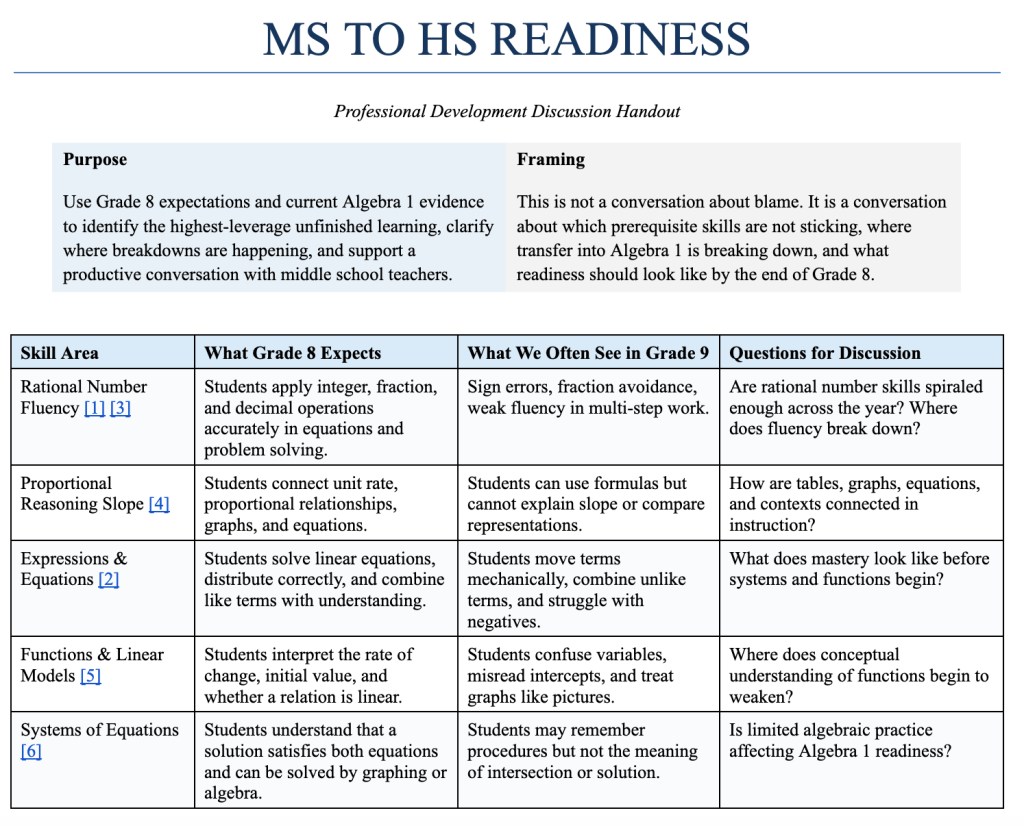
Middle School to High School Readiness Professional Development Handout
A data-informed discussion tool created to support collaborative professional learning about unfinished learning and Algebra 1 readiness across grade levels.
This artifact is a strong representation of Domain 4 because it reflects my participation in the professional community through collaborative preparation, instructional reflection, and problem-solving focused on student success. The handout was designed to support a productive cross-grade conversation about where students are arriving with strong foundations, where breakdowns are occurring, and which prerequisite skills need more attention. Its purpose is not to assign blame, but to create a shared understanding of student readiness and strengthen instructional alignment between middle school and high school mathematics.
Participating in a Professional Community
One important aspect of professional responsibility is contributing to collaborative work that extends beyond one’s own classroom. This artifact reflects my effort to engage in a meaningful conversation with middle school colleagues about the transition from Grade 8 to Algebra 1. By organizing the discussion around specific skill areas, current student evidence, and targeted questions, I worked to foster a conversation grounded in student need, professional respect, and a shared commitment to improvement. This kind of collaboration is important because stronger alignment across grade levels can help reduce instructional gaps and improve students’ long-term learning experience.
Reflecting on Student Learning and Instructional Gaps
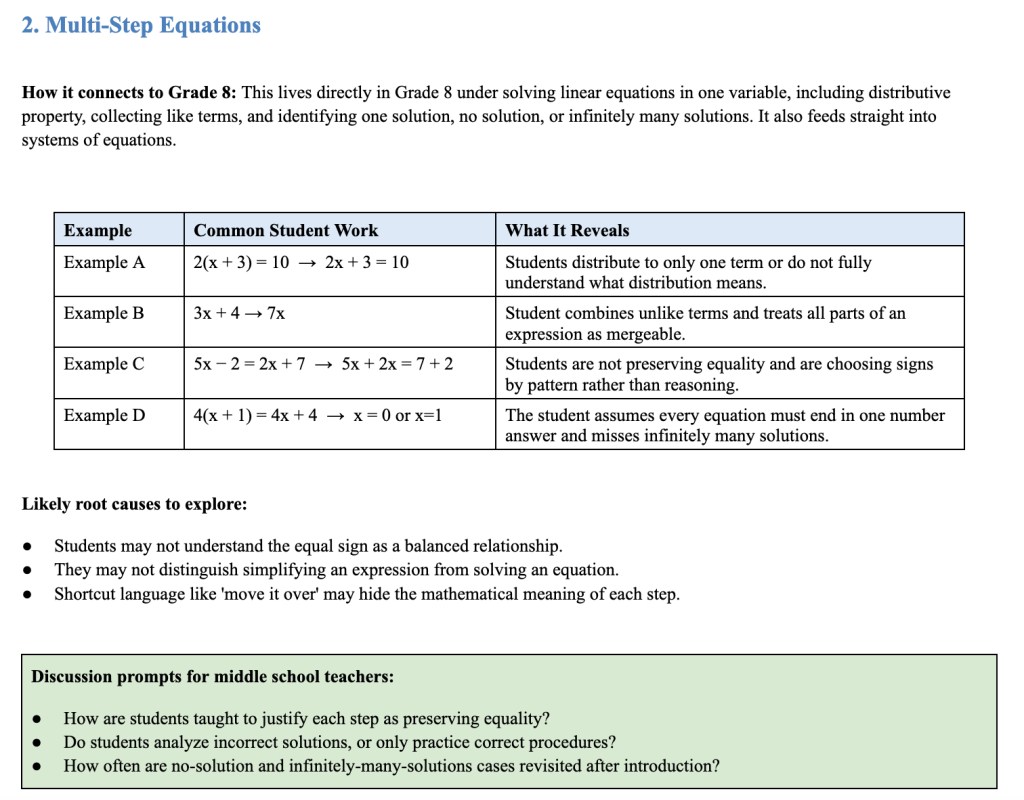
This artifact also reflects my commitment to analyzing student learning beyond surface-level observations. In preparing the handout, I examined the patterns I frequently see in Algebra 1, including sign errors, weak rational number fluency, difficulty with multi-step equations, confusion around slope and proportional reasoning, and limited conceptual understanding of systems of equations. Organizing these patterns into examples, likely root causes, and discussion prompts helped me think more deeply about how unfinished learning develops over time and how teachers across grade levels can respond more intentionally. (DuFour & Eaker, 1998)
Professional Growth Through Inquiry and Leadership
Creating this artifact strengthened my understanding of professional responsibility as an active rather than a procedural responsibility. It required me to move beyond noticing classroom struggles to investigating where they may originate, how they connect to prior curriculum, and how they can be addressed through shared professional learning. This process helped me grow as an educator by pushing me to think more systematically about instruction, grade-level transitions, and the role of teacher collaboration in supporting student achievement. It also reflects my emerging interest in instructional leadership and continuous improvement within mathematics education.
Research and Best Practice Connection
This artifact reflects research-based best practices related to professional collaboration, reflective teaching, and continuous improvement. Effective educators do not work in isolation. They analyze student learning, engage with colleagues around shared challenges, and use evidence to refine instruction over time. Cross-grade collaboration is especially valuable because it helps teachers better understand how concepts develop across years and where instructional adjustments may be needed to strengthen student readiness and long-term success.
Supporting Material
Reflection
This artifact represents my belief that professional responsibility includes collaboration, inquiry, and a willingness to examine student outcomes beyond the walls of one classroom. It reminds me that improving instruction often begins with shared reflection, honest analysis, and a commitment to working with others in ways that ultimately benefit students. (DuFour & Eaker, 1998)
 Rabih Borji