
SELECTED WORK · INSTRUCTIONAL SYSTEMS
Classroom
Metrics
A living data system that turns everyday classroom evidence into clearer instructional decisions.
ROLE
System design · Data visualization · Instructional strategy
CONTEXT
Secondary mathematics · Ongoing practice
FOCUS
Clarity · Responsiveness · Student insight
01 · THE QUESTION
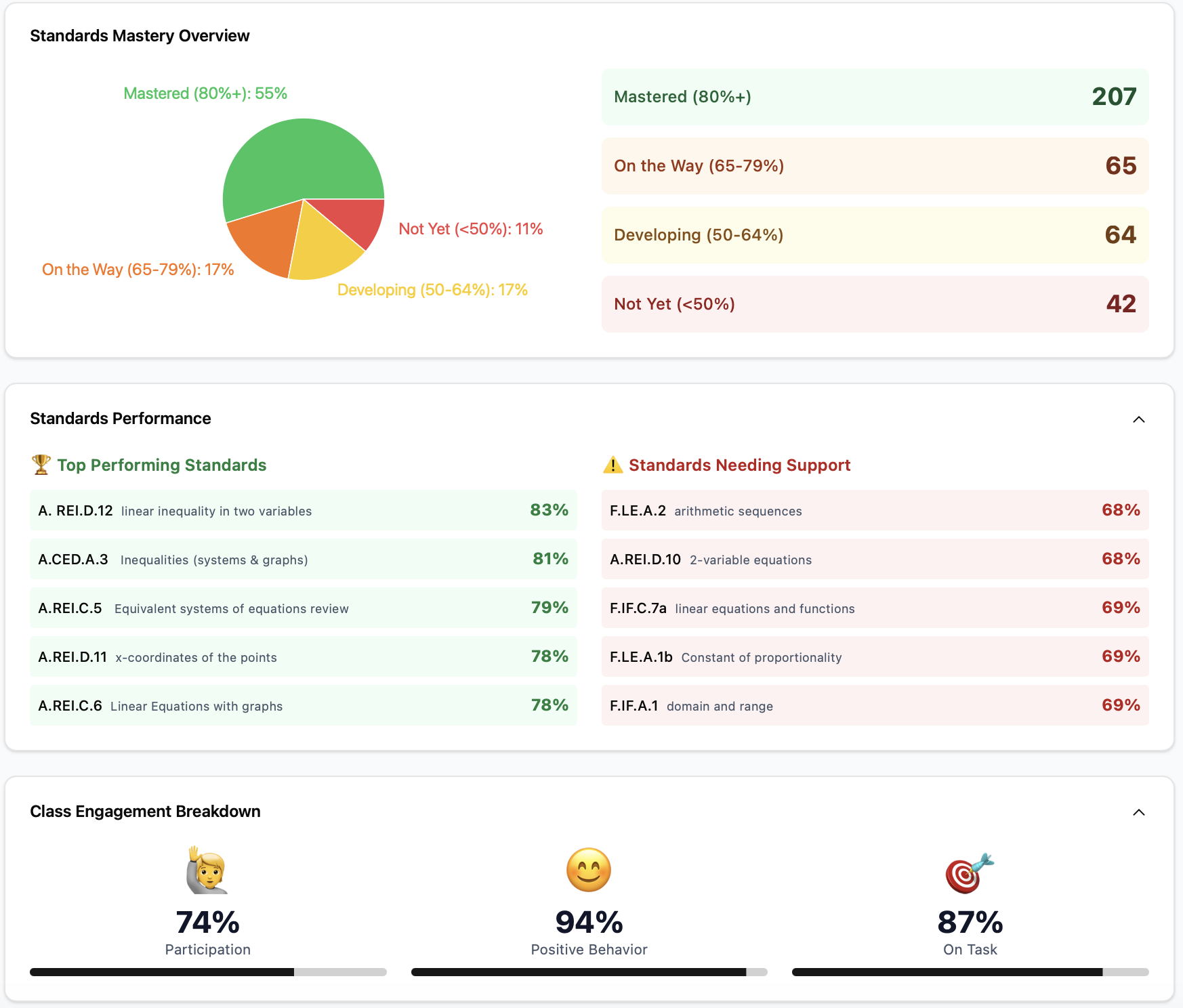
How might classroom data become a conversation—not just a record?
Teachers generate evidence constantly: standards checks, daily tasks, assessments, observations, and student questions. The challenge is rarely a lack of data. It is making that evidence visible enough—and timely enough—to shape what happens next.
02 · THE SYSTEM
A compact feedback loop.
Classroom Metrics connects planning, evidence, visualization, and response. Each part is intentionally simple; the value comes from how they work together over time.
01
Collect
Capture standards, assessments, tasks, and observations in a consistent structure.
02
Reveal
Translate results into visual patterns that can be read at a glance.
03
Respond
Use trends to guide reteaching, grouping, pacing, and targeted support.
04
Reflect
Compare the response with new evidence, then refine the next move.
03 · THE INTERFACE
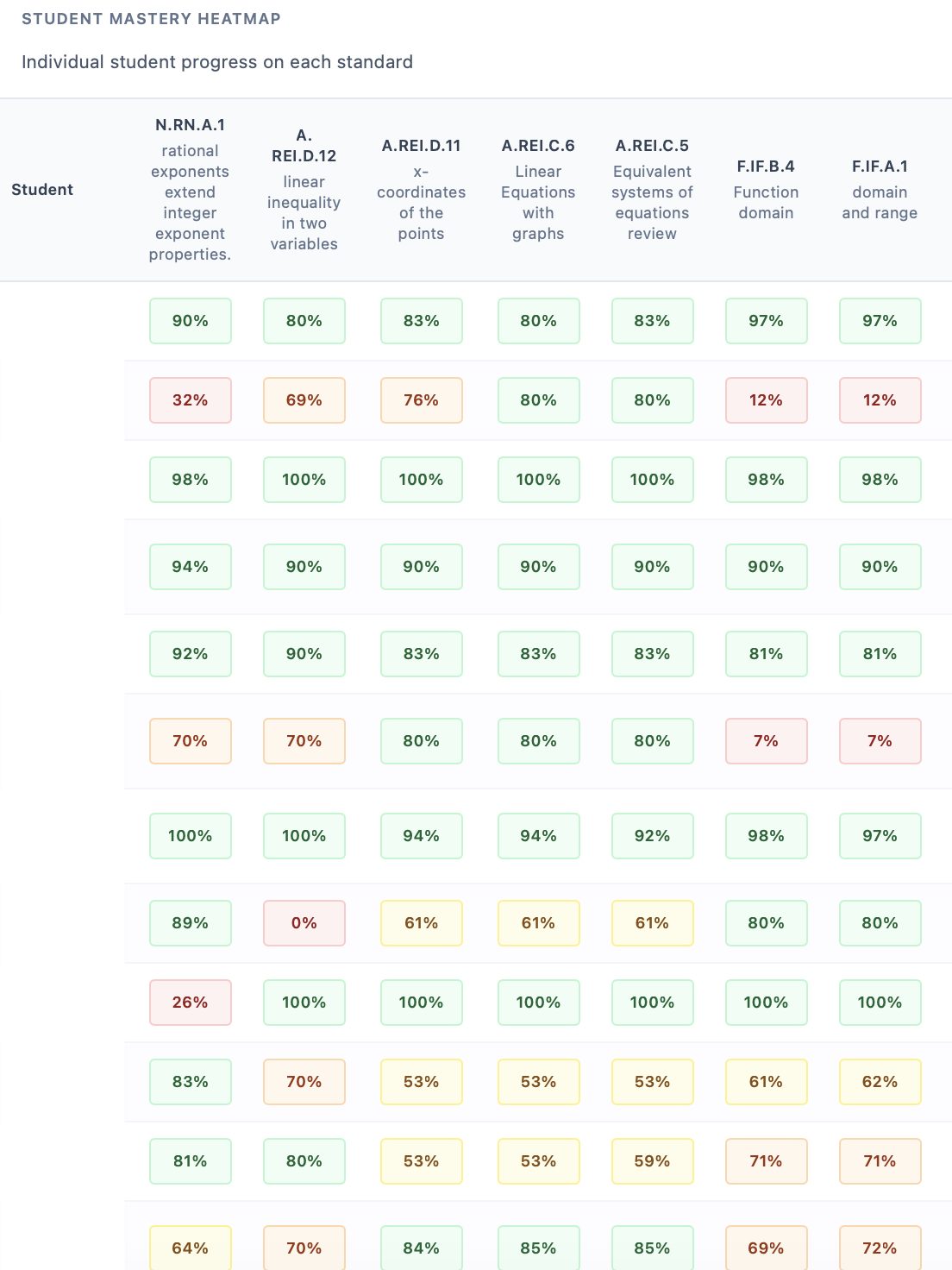
Make the pattern legible.
Heatmaps and dashboards reduce the distance between evidence and action. Color, hierarchy, and filtering help surface where a class is secure, where a concept needs another approach, and where an individual student may need a closer look.
The interface is designed to support professional judgment—not replace it.
04 · THE PRINCIPLE
Data becomes meaningful when it changes the next human decision.
The system succeeds when it creates better questions: Who needs a different representation? Which misconception is shared? What should be revisited tomorrow? It keeps evidence close to teaching, where it can remain specific, contextual, and humane.
REFLECTION
The system is never finished.
Classroom Metrics continues to evolve with the questions it needs to answer. Its most important design constraint is not technical—it is whether the system remains useful within the pace and complexity of real teaching.
 Rabih Borji